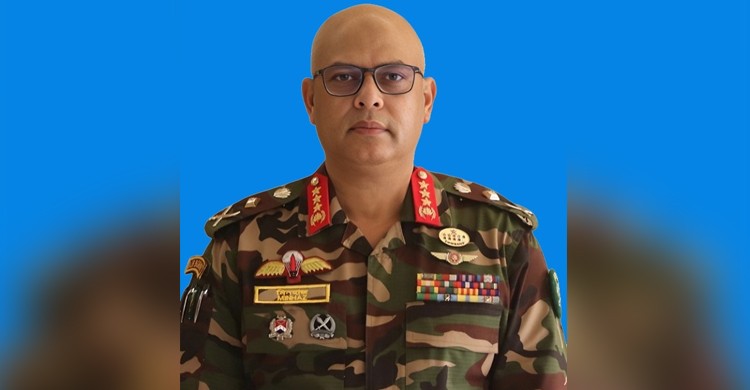
Massive Embezzlement in EVM Project Worth Thousands of Crores; Tariq Ahmed Siddique Allegedly Behind It

Monojog Prokash Desk
Published: 02 April 2026, 05:27 pm
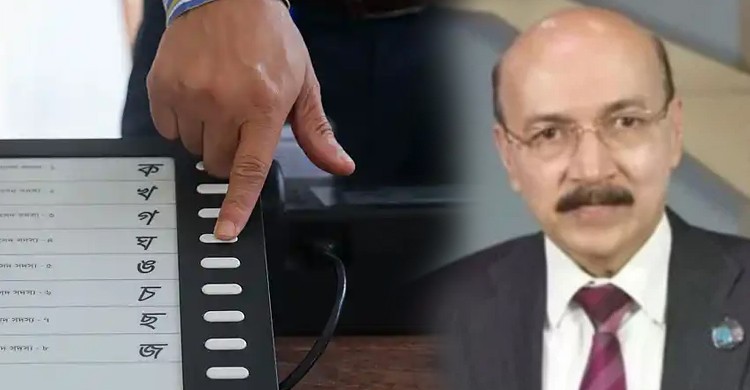
Serious allegations of large-scale corruption have emerged in the procurement of over 150,000 Electronic Voting Machines (EVMs) during the tenure of the ousted Awami League government. Reports indicate that these machines were purchased at prices more than ten times higher than the market rate.
In this Tk 3,825 crore project, the state allegedly incurred a loss of approximately Tk 3,172 crore. These shocking findings have been revealed through reports from the Office of the Comptroller and Auditor General (CAG) and sources within the Election Commission (EC). However, the project director has denied the allegations, claiming that the audit’s calculation of excess expenditure is incorrect.
Meanwhile, a team from the Anti-Corruption Commission (ACC) has already conducted an Expedition (raid) at the Election Commission office to investigate allegations of supplying substandard machines.
The corruption is alleged to involve several high-profile individuals, including former Prime Minister Sheikh Hasina’s security adviser Tariq Ahmed Siddique, former NID Wing Director General Mohammad Saidul Islam, former Managing Director of Bangladesh Machine Tools Factory (BMTF) Sultanuzzaman Mohammad Saleh Uddin, former Election Commissioner Shahadat Hossain Chowdhury, and former EC Secretary Helaluddin Ahmed.
Following the fall of the Sheikh Hasina government on August 5, Tariq Siddique reportedly fled the country, while Helaluddin Ahmed is currently in jail. Other accused individuals could not be contacted.
Investigations reveal that despite strong opposition from most political parties, including the BNP, the project to procure EVMs worth Tk 3,825 crore was rushed through just three months before the 11th national election, allegedly with the intent of manipulating votes.
Although the then Chief Election Commissioner repeatedly promoted plans to use EVMs in 150 constituencies, ultimately they were used in only six seats. Later, EVMs were used in some by-elections and local government polls.
The current Electoral Reform Commission, led by Dr. Badiul Alam Majumdar, has recommended discontinuing the use of EVMs in future elections.
According to sources, each EVM was priced at Tk 234,373, bringing the total cost for 150,000 machines to Tk 3,515 crore. However, the CAG audit report states that prices were inflated by over 1,025%, whereas the actual market price should have been around Tk 343 crore. This implies that Tk 3,172 crore was embezzled through inflated procurement costs alone.
The audit also highlights that in the 2021–22 fiscal year alone, financial irregularities amounting to Tk 1,195 crore occurred in EVM procurement and related sectors. The CAG has formally sought explanations from the project director.
Experts believe the project was hastily approved without any realistic feasibility study, primarily to facilitate large-scale embezzlement by influential individuals during Sheikh Hasina’s rule. Tariq Ahmed Siddique is alleged to have been the central figure behind the entire process.
The project was reportedly executed through collusion between key officials, including Mohammad Saidul Islam, Sultanuzzaman Saleh Uddin, Shahadat Hossain Chowdhury, and Helaluddin Ahmed.
At the time, apart from Chief Election Commissioner KM Nurul Huda and Commissioner Shahadat Hossain Chowdhury, other commissioners reportedly had little knowledge about the project. There are also allegations linking Saleh Uddin and Tariq Siddique with the controversial company “Tiger IT,” which was reportedly blacklisted by the World Bank. At one point, the entire EC data system was allegedly under the control of this company.
The project was approved based on misleading information and superficial paper-based studies rather than proper field research. It was claimed that EVMs would reduce election costs compared to paper ballots; however, in reality, EVM-based elections proved to be at least 1.5 times more expensive. Costs increased due to transportation, specialized training, voter awareness campaigns, and additional staffing.
Notably, no budget was allocated for the storage, transportation, or maintenance of these machines, which has now become a major burden for the Election Commission. Currently, only around 40,000 out of 150,000 machines remain functional.
A proposal by BMTF to repair the machines at a cost of Tk 1,260 crore was rejected by the Ministry of Finance, leaving the machines unrepaired.
The current Election Commission, led by AKM Nasir Uddin, has officially decided not to use EVMs in future elections. As a result, the entire Tk 3,825 crore project is now on the verge of becoming a complete loss.
The audit report also reveals irregularities such as abnormal pricing, direct procurement without tenders, and gross violations of financial regulations. Market price comparisons were manipulated using arbitrary data collected from the internet regarding machines used in countries like India, Brazil, and Maryland.
There was also fraud regarding warranty terms. While the Planning Commission was promised a 10-year warranty per machine, the audit found that suppliers provided only a one-year warranty. Consequently, despite most machines being repairable, no service support was available.
Out of the total machines, only 40,000 are currently usable, around 24,000 are completely damaged, and 86,000 remain repairable but unused.
Earlier, Transparency International Bangladesh (TIB) had raised concerns about the project, stating that such a large investment without proper feasibility studies, technical capacity assessment, or voter readiness evaluation was highly questionable.
Former Election Commissioner Rafiqul Islam stated, “Although the EVM project was undertaken during our tenure, I have no knowledge of its internal matters. I still do not know at what price the machines were purchased.” He also claimed that all procurement decisions were controlled centrally by the CEC and EC Secretary.
National
Read More
Civil–Military Harmony Essential for Strong State Building: Defence Adviser at DC Conference
Seven Arrested, Including Mastermind, Over Extortion Attempt at CKD Hospital
New Era in Malaysia’s Labor Market: AI to Curb Syndicates in Worker Recruitment