
Civil–Military Harmony Essential for Strong State Building: Defence Adviser at DC Conference

Monojog Prokash Desk
Published: 05 May 2026, 05:10 pm
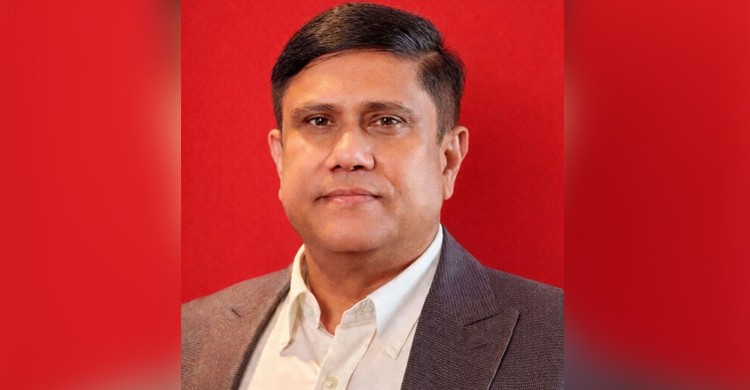
At the Deputy Commissioners (DC) Conference, Special Guest and Defence Ministry and Armed Forces Division Adviser (rank equivalent to State Minister), Brigadier General (Retd.) Dr. A K M Shamsul Islam, stated that a truly democratic and strong state system cannot be built without mutual respect and harmonious relations between military and civilian administrations.
He said, “A state where a rift develops in civil–military relations can never sustain a stable governance system.”
Senior officials including the Chiefs of the Army, Navy and Air Force, the Cabinet Secretary, the Principal Staff Officer of the Armed Forces Division, and the Defence Secretary were present at the event. Addressing the Deputy Commissioners, he provided guidance on the current government’s defence policy, multidimensional national security challenges, and issues inherited from previous administrations.
Dr. Shamsul Islam emphasized that the Armed Forces are an integral part of the people. Recalling the 1971 Liberation War, he noted that the military has always stood beside the nation during crises—whether natural disasters or national emergencies.
He further said that in recent periods of instability, the armed forces have supported democratic processes through coordination with the civilian administration.
The Defence Adviser stated that modern national security is no longer limited to territorial defence or conventional warfare. Cyber attacks, climate change, pandemics, information warfare, and economic pressures are now key security threats.
He also mentioned that the government is reviving the “Total People’s War” concept of Shaheed President Ziaur Rahman. As part of this initiative, efforts are underway to develop an integrated defence structure by combining organizations such as BNCC and Ansar–VDP.
He added that, under the guidance of Tarique Rahman, efforts are ongoing to build a strong domestic defence industry to ensure credible deterrence.
Addressing the DCs, he urged caution in the use of foreign terms such as terrorism, extremism, or radicalism, noting that Bangladesh’s social context does not fully align with these terminologies.
He stressed that Bangladesh is a country of tolerance and harmony, where people of different religions and communities live peacefully together. Therefore, sensitivity must be maintained in official language and administrative communication.
Referring to members of the armed forces as “uniformed citizens,” he said they serve the nation with strict discipline and sacrifice, and therefore deserve proper respect and cooperation from the civilian administration.
Dr. Shamsul Islam also remarked that past “fascist regimes” and subsequent administrative challenges have created institutional weaknesses in various sectors, which the government is now working to resolve.
He warned that any official involved in personal gain, corruption, or irregularities would not be part of the national development process.
Concluding his speech, he called on everyone to adopt a “Bangladesh first” approach and work together to build a united, stable, and developed nation free from division.
National
Read More
Seven Arrested, Including Mastermind, Over Extortion Attempt at CKD Hospital
New Era in Malaysia’s Labor Market: AI to Curb Syndicates in Worker Recruitment
Lt. Gen. Minhazul Alam Appointed Force Commander of UN Peacekeeping Mission in Cyprus