Final Decision Lies with Parliament: First Session to Determine Fate of 132 Ordinances

Monojog Prokash Desk
Published: 24 February 2026, 08:47 am
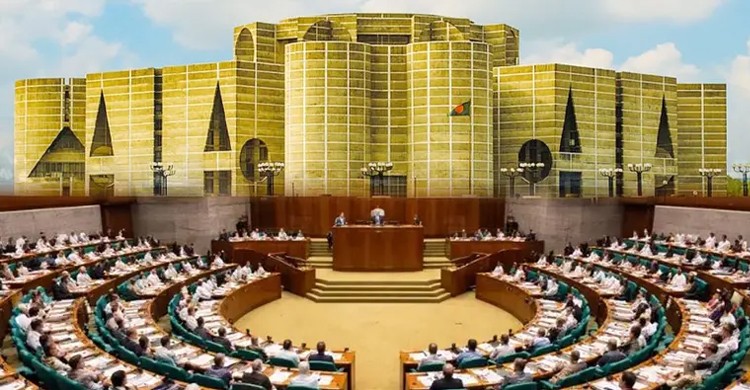
During the 18-month tenure of the interim government, a total of 132 ordinances were promulgated, most of which are unlikely to be enacted into law. According to relevant sources, this situation has emerged primarily due to a lack of willingness on the part of the ruling Bangladesh Nationalist Party (BNP)-led government. Under the Constitution, the ultimate fate of these ordinances now rests with the Jatiya Sangsad.
The President has convened the first session of the National Parliament on March 12. The session will begin at 11:00 am and marks the first parliamentary sitting of the current government. The Parliament Secretariat has already completed the necessary preparations. The future of the ordinances issued during the interim government period will be decided in this very session.
Government sources say that the administration has adopted a strategy to avoid ordinances that conflict with BNP’s reform agenda and election manifesto. The BNP was not fully aligned with the interim government’s reform process and policy positions. However, initiatives are underway to enact some key ordinances related to structural reforms and public interest.
According to Parliament Secretariat data, more than fifty ordinances may be tabled and converted into laws. The rest will automatically lapse if not approved by Parliament. These ordinances covered a wide range of crucial areas, including the electoral system, judiciary, law and order, criminal justice, anti-corruption, money laundering, public administration, local government, economy, revenue and budget, banking and financial sectors, digital and cyber security, human rights, and good governance.
Officials concerned stated that before converting any ordinance into law, the respective ministry must assess whether it remains relevant in the current context. The concerned minister must first give an opinion. If necessary, the ordinance will be presented to the Cabinet in the form of a draft law. Only after Cabinet approval can it be placed before Parliament.
Notable ordinances include the Interim Government Ordinance 2024, which defined the rank, authority, and functions of the Chief Adviser and Advisers. Amendments were also made to ordinances related to Bangladesh Bank to restore discipline in the banking sector. In addition, the District and Upazila Parishad (Amendment) Ordinance 2024 was issued to reorganize and reform the local government system. Ordinances related to legal aid, forest conservation, and wildlife protection were also promulgated during this period.
Under constitutional provisions, any ordinance issued by the President lapses if it is not converted into law within 30 days of the first sitting of Parliament. Following the July mass uprising on August 5, 2024, which led to the ouster of the Awami League government, the interim administration assumed office on August 8. It issued 17 ordinances in 2024, 80 in 2025, and 35 more before the new government took oath on February 17, 2026—bringing the total to 132 ordinances.
Previously, the caretaker government during the “One-Eleven” period issued 122 ordinances between 2007 and 2009. A special parliamentary committee was later formed in the Ninth Parliament, which recommended converting 54 of those ordinances into law, while the rest were annulled due to lack of parliamentary approval.
Legal experts note that an ordinance is essentially a law promulgated by the President under Article 93 of the Constitution. However, once Parliament is in session, the final authority lies with Parliament itself.
It is noteworthy that with the formation of a new government on February 17 under the leadership of Tarique Rahman, the much-debated 18-month rule of the interim government came to an end. In the national election held on February 12, voting took place in 299 out of 300 constituencies. The BNP secured more than a two-thirds majority, forming the government and marking the country’s full return to the path of parliamentary democracy.
National
Read More
Allegations of Irregularities in Dhanmondi Apartment Management; Written Complaint Filed with Police
Mithu Murad Receives BMS Best Personality Award 2026 in Journalism
Civil–Military Harmony Essential for Strong State Building: Defence Adviser at DC Conference